

Key Takeaways:
- Offer two or three visible choices, keep candy wrapped and non-food treats separate, and let children or caregivers choose at a calm, well-lit doorstep.
- Give treats without requiring speech, eye contact, a costume, or an explanation; pointing, reaching, communication devices, and caregiver responses all count.
- A successful Halloween fits your child, not a house count: use your home language and traditions, keep practice optional, and honor break or finish signals.
A six-year-old in everyday clothes reaches your doorstep, holds out her bag, and says nothing at all. She deserves the same warm welcome and the same treats as the child in full costume shouting “trick or treat!”
Most Halloween “rules” are unwritten social demands: say the phrase, make eye contact, wear the costume, say thank you. Autism-inclusive Halloween candy distribution starts from the opposite direction. The host adjusts the interaction to fit the child, and the child is never asked to fit the holiday. Working with families at Apollo Behavior, we see that comfortable participation looks different in every home. Sensory-considerate treat choices, flexible communication, and family-led routines can make any doorstep welcoming, with no speech, eye contact, or costume required.
Offer Sensory-Friendly Halloween Treats and Non-Food Choices
No single treat works for every child with autism, so the host’s best move is not guessing right; it is offering options. Sensory-friendly Halloween treats and non-food choices start with one simple idea: let the child pick from a few options they can see. The choice itself becomes the welcome.
Keep the Selection Small and Visible
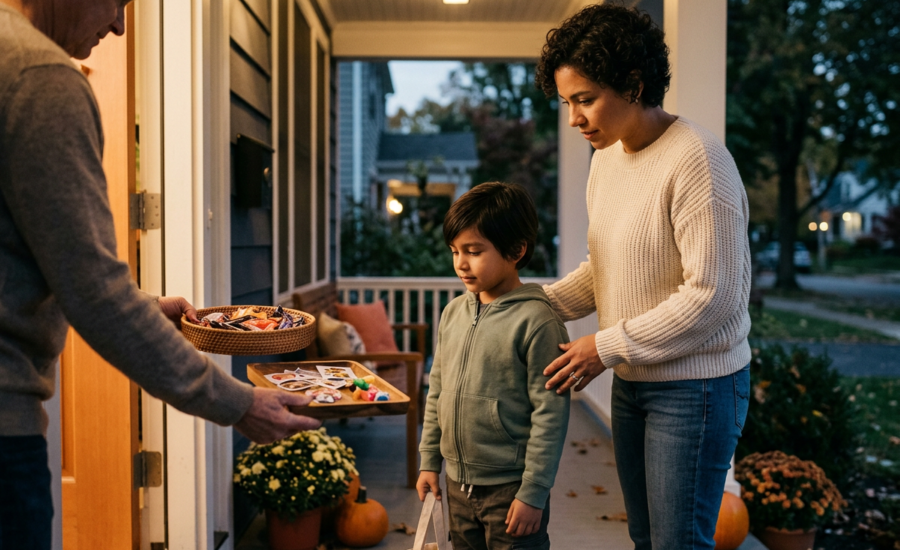
A crowded bowl can feel like too much at once. Two or three options work well, such as familiar wrapped candy, stickers, and age-appropriate coloring cards. One child may love chocolate, while another happily skips food for a sheet of stickers. Preferences vary widely, which is why our autism toy guide covers such different sensory and activity ideas. A visible selection puts the decision in the hands of the child or caregiver, not the host.
Leave Packaging Intact and Separate
Keep every piece of candy in its original wrapper. Caregivers can then read the ingredients and judge what suits their child. Place stickers and coloring cards in their own container, away from the candy. Avoid calling any shared bowl allergen-free, since hands and wrappers mix quickly at the door.
Create a Calm Spot at the Door
Flashing lights and sudden sound effects can make a doorstep hard to approach. Turn off jump-scare decorations and choose steady porch lighting. Offer to hold the containers low, where the child can look them over without reaching past you. These small changes reflect the calm, flexible settings that help many children with sensory sensitivities feel at ease.
Welcome Nonspeaking Children Without a Required Greeting
The simplest way to welcome nonspeaking children at Halloween is to keep the offer short and then wait. Instead of repeating “Say trick or treat!”, try a friendly “Candy or stickers?” followed by a calm, unhurried pause. Speech and Language Kids also encourages giving children who use communication devices extra time to respond. A pointed finger, a reach, a tap on a device, or a parent speaking for the child are all clear choices. Hand over the treat right away, with no eye contact, spoken thank-you, or costume required.
A warm welcome matters more than a perfect exchange. Smile, say hello, and let the child decide how much to engage. Avoid touching the child or reaching for their communication device, since that device is how they speak. Some families carry an optional card explaining that their child may not talk, and Autism Speaks suggests letting children help decide whether to share it. Neighbors never need that card or a diagnosis to be kind. When every visitor gets the same patient choice, no child has to explain themselves to belong on your doorstep.
Choose a Halloween Candy Routine That Fits Your Family
A comfortable Halloween candy routine can look many different ways, and every version counts. One family may visit a single familiar doorstep before dark. Another may take a short early walk, or stay home and hand out treats together. Some families skip door-to-door trick-or-treating entirely and celebrate their own way. The number of houses visited says nothing about a child’s success. A calm evening that feels good to your child is the real win.
Whichever option you pick, previewing it with photos or a pretend doorstep at home can help, as long as practice stays playful and optional. Use your home language and familiar traditions, with no English greeting or rehearsed performance required. Agree on a simple break or finish signal, plan a quiet exit, and honor the signal right away. Telling trusted neighbors about your child’s preferences ahead of time is your family’s choice, never an expectation.
Autism-Inclusive Halloween Candy Distribution FAQ
Even with a thoughtful plan, small surprises happen at the door. Parents and neighbors often share the same autism inclusive Halloween candy distribution FAQ, and most answers come down to one habit: keep the choice with the child and family. Here are a few real-life moments and simple ways to handle them.
Should a neighbor choose candy for a child whose caregiver mentions an allergy?
No. Hold the containers out and let the caregiver pick, since they know exactly what their child can safely enjoy. Avoid guessing or promising that something is safe. Pointing out your non-food options is a kind backup, and many families appreciate having that easy alternative.
What should a neighbor do if a child cannot approach the candy bowl?
Meet the child where they feel comfortable. Take a few slow steps closer, or set the containers on a low step where the child can see them. You can also hand the choices to the caregiver, who can carry them back. Staying calm and quiet keeps the moment low pressure.
How can a host respond when a child’s preferred treat has run out?
Be honest and brief: “We’re out of those. Would you like this one or a sticker?” Showing two remaining options helps the child make a fresh choice without a long explanation. If the child declines, that answer is welcome too. Wish them a happy Halloween and let them move on.
Build Everyday Skills With Family-Centered Support
Pick one small change: a quiet treat spot, a “candy or stickers?” offer, or one familiar doorstep before dinner. Each one moves the work from the child to the adult holding the bowl. That is the whole idea. When the doorstep adjusts, the child who says nothing at all gets the same welcome as the one shouting “trick or treat!”, and Halloween stays a celebration rather than a test.
Some families want communication support that lasts past October. Center-based ABA therapy offers personalized programs, one-on-one sessions, and play-based learning guided by Board Certified Behavior Analysts with small caseloads. Talk with Apollo Behavior about your child’s communication goals, your home language, and the traditions that matter to your family.