

Key Takeaways:
- Discrete Trial Training (DTT) is a proven, structured teaching method in ABA therapy that breaks complex skills into manageable steps, helping children with autism achieve measurable progress.
- Combining DTT with Natural Environment Teaching (NET) ensures children not only master foundational skills but also use them confidently in everyday life.
- Apollo Behavior’s center-based ABA programs integrate DTT, play-based learning, and expert supervision to deliver faster, more consistent developmental gains for children with autism.
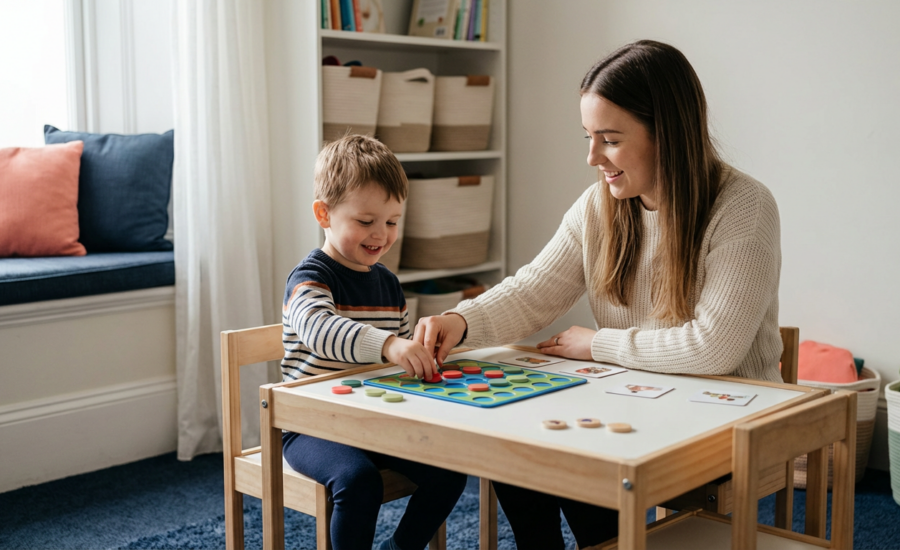
A child who struggles to match colors suddenly lights up when they successfully pair red with red. That moment of connection happened because of careful, structured teaching that broke the task into clear steps. Each small success builds toward bigger breakthroughs through discrete trial training.
This breakthrough moment illustrates the power of this method, which teaches new skills through clear instructions, guided practice, and immediate feedback. DTT helps children with autism learn everything from communication to self-help skills. You’ll discover how this approach works, why it accelerates learning, how it compares to natural teaching methods, and simple ways to support your child’s progress at home.
Ready to explore how structured learning can unlock your child’s potential? Apollo Behavior offers personalized ABA therapy programs designed around your family’s unique needs.
How Discrete Trial Training Helps Children Learn New Skills
When your child is learning new skills, you want to see real progress that sticks. Understanding how discrete trial training helps children learn new skills can give you confidence in your child’s therapy journey. DTT works by breaking down complex abilities into manageable pieces, then practicing each piece with consistent structure and immediate feedback. This method transforms what might feel impossible into achievable steps your child can master with growing independence.
Consistent Structure Reduces Confusion and Builds Success
DTT creates a predictable learning environment where your child knows exactly what to expect. Each teaching moment follows the same pattern: a straightforward instruction, support when needed, your child’s response, and immediate positive feedback. This consistency eliminates guesswork and helps children focus on learning rather than figuring out what’s expected. When children understand the routine, they can concentrate on mastering new skills instead of managing uncertainty.
Personalized Prompting Grows Independence Over Time
Every child receives the specific support they need to succeed, then gradually less help as they improve. If your child struggles with a task, they might receive hand-over-hand guidance. As they improve, this becomes a gentle touch, then just pointing, until they respond independently. Board Certified Behavior Analysts carefully track your child’s progress and adjust prompting levels based on real data from each session. This step-by-step process builds real confidence because your child earns each milestone of their independence.
Skills Transfer from Therapy Room to Real Life
The magic happens when skills learned during discrete trial training naturally appear in everyday situations. Children practice communicating, following directions, matching objects, and developing self-help skills in structured sessions, then use these same abilities during snack time, getting dressed, or playing with siblings. For example, a child who learns to match colors during DTT might spontaneously sort their toys by color at home. Therapists deliberately plan for this transfer by varying materials, people, and settings so your child’s new skills become part of their daily toolkit.
The 5 Steps of Discrete Trial Training for Autism, Explained
These five steps show why discrete trial training works so effectively for children. Each trial follows a clear, predictable pattern that creates multiple learning opportunities throughout a session, helping children build confidence while mastering new skills. Research shows that this structured approach, when implemented by trained professionals, leads to measurable improvements in children’s skill acquisition.
Here’s how each trial unfolds during your child’s center-based therapy:
- Instruction (SD): The therapist gives a clear, simple direction like “Touch red” or “Give me the ball,” setting up a clear learning opportunity for your child to practice a targeted skill.
- Prompt (if needed): If your child needs help, the therapist provides just enough support, maybe pointing to the red card or gently guiding their hand, then systematically reduces this help over time.
- Child’s response: Your child attempts the skill, whether they get it right, wrong, or need more time, and the therapist waits patiently for their best effort.
- Immediate feedback: Correct responses earn meaningful praise and preferred activities, while incorrect responses receive gentle correction and another chance to try.
- Quick data collection: The therapist briefly notes the response to track progress and adjust teaching strategies, ensuring your child gets the right level of challenge.
This cycle repeats many times during each session, giving your child frequent opportunities to practice and master new skills. The evidence-based approach behind this ABA therapy method shows that this high-frequency practice builds confidence and fluency much faster than occasional, unstructured attempts.
Discrete Trial Training vs. Natural Environment Teaching: What’s the Difference?
Understanding the difference between discrete trial training and natural environment teaching (NET) helps you recognize how your child’s therapy team uses both methods to maximize learning. Each approach has unique strengths that work together to help your child master new skills and use them confidently in everyday situations.
The comparison below breaks down five key areas where these teaching methods differ. “Setting” refers to where learning happens, “prompting style” describes how therapists guide your child, “reinforcement” explains the types of rewards used, “data collection” covers how progress is tracked, and “best use cases” shows when each method works most effectively.
| Aspect | Discrete Trial Training (DTT) | Natural Environment Teaching (NET) |
|---|---|---|
| Setting/Context | Quiet table sessions with specific learning materials | Play areas, snack time, and everyday activities |
| Prompting Style | Step-by-step guidance that gradually reduces over time | Gentle cues that happen naturally during activities |
| Reinforcement | Immediate, consistent rewards after each attempt | Rewards that happen naturally during play and activities |
| Data Collection | Precise tracking of each learning trial | Notes taken during natural interactions and play |
| Best Use Cases | Building foundational skills with accuracy and speed | Helping children use skills spontaneously in real life |
Research on combined DTT and NET techniques demonstrates that children benefit most when both methods work together. You might notice your child practicing letter recognition at a table during discrete trial sessions, then using those same letters to spell their name during snack time or art activities.
The most effective programs blend both techniques under expert supervision, with DTT building strong foundations and NET helping children transfer those abilities to various environments and people. Apollo Behavior’s center-based therapy programs seamlessly integrate both methods, creating comprehensive treatment plans that meet each child exactly where they are in their learning journey.
Discrete Trial Training: Frequently Asked Questions (FAQs)
Parents often have practical questions about how discrete trial training works in daily life and what to expect during their child’s therapy journey. Understanding the details helps you feel confident about your child’s program and know how to best support their learning at home.
How can I support my child’s DTT progress at home without making every moment feel like therapy?
The key is following your child’s lead during natural moments. When they ask for a snack, practice the same requesting skills their therapist targets. Research shows that parent training in DTT techniques can be highly effective. Keep interactions brief, fun, and celebrate small wins to maintain the joy in everyday activities.
How many trials happen in a typical session, and how do therapists measure progress?
Most DTT sessions include 8 to 10 trials per target skill, with 3 to 5 different targets addressed during a typical hour-long session. Therapists track your child’s responses trial by trial, measuring percent correct and prompt levels needed. Data collection methods show that systematic recording provides reliable progress information when combined with consistent mastery criteria.
What happens if my child gets frustrated during DTT sessions?
Skilled therapists watch for early signs of frustration and adjust immediately. They might switch to easier targets, increase reinforcement, or take a brief play break. Center-based therapy allows for real-time adjustments by Board Certified Behavior Analysts who monitor each session closely to keep your child engaged and successful.
How long does it take to see progress with discrete trial training?
Progress timelines vary for each child, but many families notice improvements within the first few weeks of consistent therapy. Your child’s team tracks data daily and adjusts programs based on their response patterns. DTT’s structured approach allows for precise measurement, so you’ll have clear evidence of growth rather than wondering about development milestones.
How do skills learned in DTT transfer to everyday situations at home?
Generalization is built into every DTT program from the start. Therapists systematically practice skills across different materials, people, and settings. Your child’s team will provide specific strategies for reinforcing these skills during daily routines. Getting started with a comprehensive program includes family training to support this important transfer of learning.
Next Steps: Support Your Child With Center-Based ABA Therapy
Discrete trial training gives your child the structured, personalized practice needed to master new skills with confidence. Research shows that center-based ABA programs deliver higher rates of skill mastery per hour than home-based services. When combined with play-based learning and natural environment teaching, DTT becomes a powerful tool for closing developmental gaps faster.
That’s why choosing the right provider matters. Every child deserves consistent, expert care that never gets canceled; a promise we’ve kept for every single family we serve. Apollo Behavior’s clinic-based programs blend discrete trial training with engaging activities under Board Certified Behavior Analyst supervision. With insurance coverage through Anthem and Humana, plus convenient locations across the Atlanta metro area, getting started is easier than you might think.
Ready to see how personalized ABA therapy can help your child thrive? Apollo Behavior is here to guide your family every step of the way.